System Application
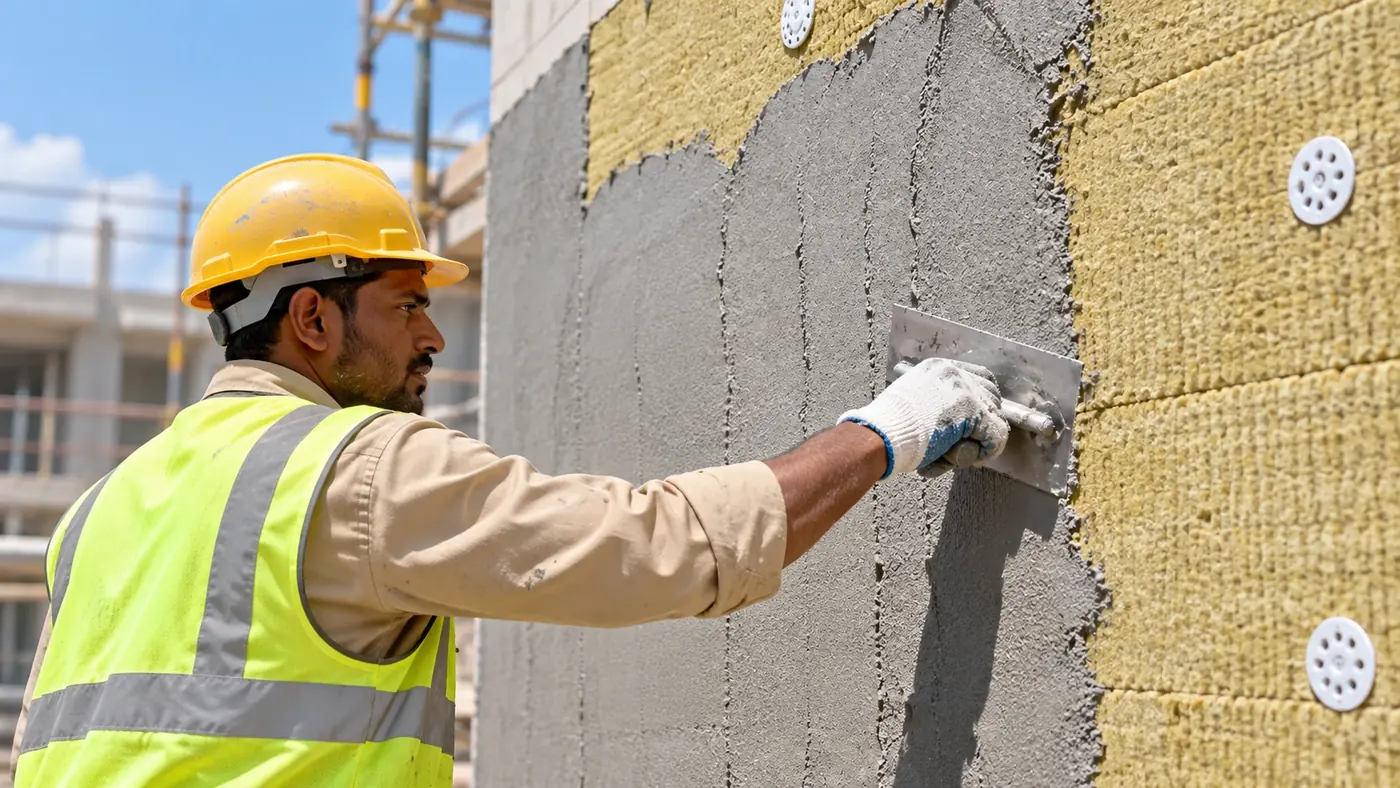
Insulation boards fixed to the facade, then a reinforced basecoat trowelled over the mesh.
ApplicationIn a climate where cooling dominates a building's energy use, the facade is the single most important line of defence against the heat. Traditional plastered-and-painted walls insulate from the inside at best and leave the structure exposed to relentless solar gain and thermal bridging. EIFS — Exterior Insulation and Finish Systems — takes a fundamentally better approach: it wraps the entire building in a continuous layer of insulation on the outside, then seals it beneath a reinforced, weather-resistant decorative render. The structure stays cooler, air-conditioning works less, and the facade looks seamless from ground floor to parapet.
Hill Technical Services is a certified EIFS applicator delivering complete external insulation systems for new build and retrofit projects across the UAE. We install both EPS-based systems for cost-efficient thermal upgrades and non-combustible mineral-wool systems where fire performance is critical. Every system is specified to the building's height, exposure, and compliance requirements — and applied by trained crews following the manufacturer's exact protocol for adhesive coverage, mechanical fixing, mesh embedment, and finish application. Nothing about a high-performance facade is left to chance.
Beyond energy performance, EIFS is a powerful tool for meeting Dubai's Al Sa'fat Green Building System and Abu Dhabi's Estidama requirements, improving the wall assembly's U-value and helping projects earn their building-envelope credits. And because the system can be applied over an existing facade, it is one of the most effective ways to modernise an ageing building — renewing both its appearance and its efficiency in one operation. We work with the systems trusted on the region's most demanding projects, including Weber, Knauf, and Caparol.
Insulation boards fixed to the facade, then a reinforced basecoat trowelled over the mesh.
Application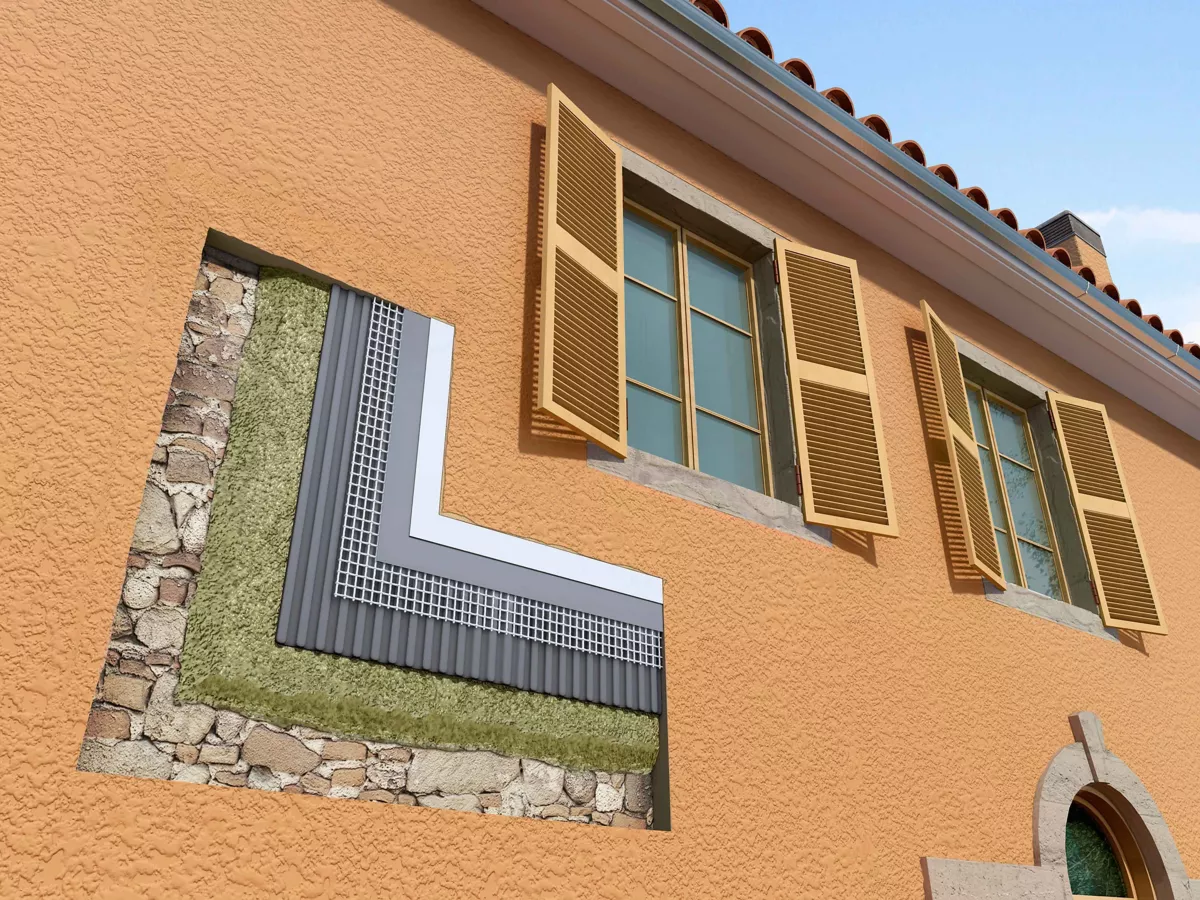
Substrate, insulation, reinforcement mesh, basecoat and decorative render — one continuous system.
System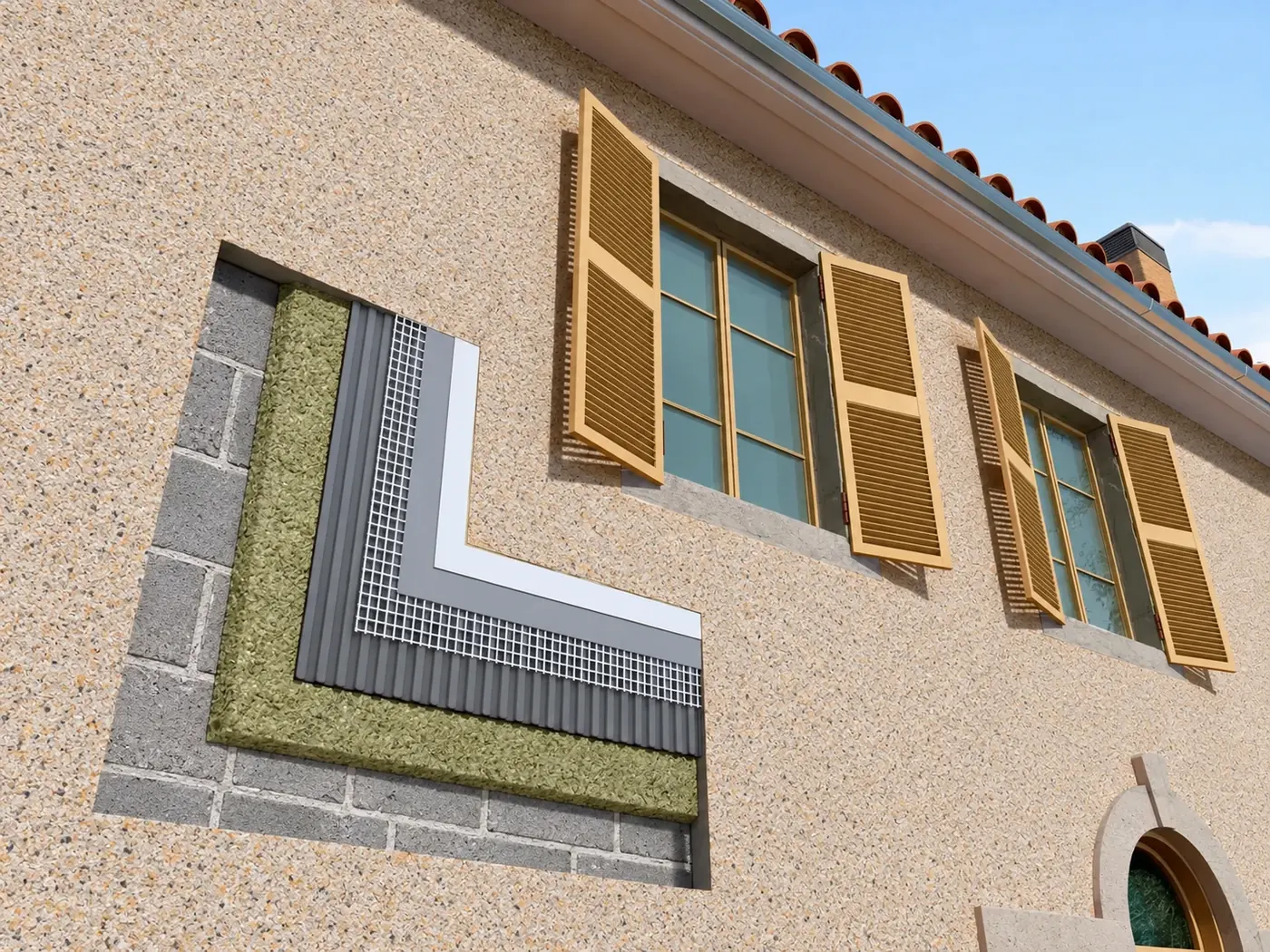
A seamless, insulated facade with a durable, weather-resistant decorative render finish.
FinishExpanded polystyrene insulation boards bonded to the substrate deliver excellent thermal performance at an efficient cost. EPS systems are lightweight, easy to shape around architectural detailing, and ideal for low- to mid-rise facades where non-combustible construction is not mandated.
Non-combustible stone-wool insulation systems specified for buildings that require fire-safe facades under UAE Fire and Life Safety Code requirements. Mineral wool combines thermal insulation with A-rated fire performance and superior acoustic properties.
A polymer-modified basecoat embedded with alkali-resistant fibreglass mesh forms the structural heart of every EIFS. This reinforced layer distributes stress, resists impact and cracking, and creates the stable base onto which the finish is applied.
Weather-resistant acrylic, silicone, and mineral render finishes in a full range of colours and textures. These topcoats provide the facade's final appearance while remaining breathable, UV-stable, and self-cleaning against the region's dust and humidity.
Wet-wall EIFS with an integrated drainage cavity that manages any incidental moisture behind the system, allowing it to drain and dry. This configuration adds an extra layer of long-term protection for facades exposed to driving rain or high humidity.
Insulated overcladding applied directly over an existing facade to upgrade thermal performance and appearance in a single operation. Retrofit EIFS renews ageing buildings, cuts their energy consumption, and typically proceeds without disrupting the occupants inside.
We assess the substrate condition, existing finishes, exposure, and building height to determine the correct fixing strategy and system type — the foundation of a facade that performs long-term.
Based on thermal targets and compliance requirements, we specify the insulation type, thickness, basecoat, mesh, and finish — with documented U-values for Al Sa'fat and Estidama submissions.
Our crews are trained and certified by the system manufacturers. Adhesive coverage, mechanical fixing, mesh embedment, and finish application each follow the exact approved protocol, inspected layer by layer.
Every stage is inspected and documented. On completion we deliver as-built records, system datasheets, and manufacturer warranty certificates where applicable.
EIFS stands for Exterior Insulation and Finish System — a multi-layered external wall system that bonds a layer of insulation board to the facade, covers it with a reinforced basecoat and mesh, and finishes it with a decorative, weather-resistant render. The result is a single, continuous system that insulates the building, eliminates thermal bridging, and delivers a seamless architectural finish. Unlike traditional plaster and paint, EIFS moves the insulation to the outside of the structure, keeping the building envelope cooler and improving energy performance.
Yes, when the correct system is specified. For buildings that require non-combustible facades under UAE Fire and Life Safety Code requirements, we install mineral-wool-based EIFS, which uses non-combustible stone wool insulation in place of EPS. We specify each system according to building height, occupancy, and the relevant civil defence classification, and we only apply tested, certified systems from manufacturers such as Weber, Knauf, and Caparol. Every specification is documented so it can be reviewed and approved by the consultant and authorities before work begins.
It is designed to. Because EIFS wraps the building in a continuous layer of insulation and removes the thermal bridges that let heat pass through walls, it keeps the structure cooler and reduces the load on air-conditioning systems. In Dubai's climate, where cooling can account for a very large share of a building's energy use, a properly specified EIFS facade can reduce cooling demand and improve occupant comfort. The actual saving depends on the building, the insulation thickness and how the building is operated.
EIFS is one of the most effective ways to hit the thermal-performance and energy-efficiency targets set by Dubai's Al Sa'fat Green Building System and Abu Dhabi's Estidama Pearl Rating System. By improving the wall assembly's U-value and reducing thermal bridging, EIFS helps projects meet or exceed the building-envelope criteria within these frameworks. Hill specifies systems with documented thermal values so the contribution to your green-building rating can be calculated and evidenced during compliance submissions.
Absolutely. Overcladding an existing facade with EIFS is one of the most cost-effective ways to upgrade an ageing building's thermal performance and appearance in a single operation. We begin with a facade survey to assess the substrate, identify any repairs needed, and confirm the fixing strategy — mechanically fixed, adhesive, or a combination. The new insulated system is then applied over the prepared surface, renewing the look of the building while cutting its energy consumption, all typically without disrupting the occupants inside.